
Lesson 21: Improving Mahjong Hand Shape – 5 Proven Ways to Build Stronger Hands Faster
Improving mahjong hand shape is one of the most important skills separating casual players from consistent winners. Many players understand the rules of mahjong but still feel stuck because their hands never seem to come together cleanly. The reason is rarely luck. It is almost always hand shape.
Hand shape determines how many ways your tiles can improve over time. A well-shaped hand stays flexible, adapts to the table, and reaches completion faster. A poorly shaped hand forces you to chase specific tiles and collapse the moment one route fails.
This guide explains what hand shape really means, how to recognize weak structure early, and how to make discard decisions that strengthen your hand instead of quietly damaging it. Check the drill at the end of this lesson.
What Is Mahjong Hand Shape?
Hand shape describes how easily your current tiles can turn into melds. A strong shape gives you multiple improvement paths, while a weak shape depends on very specific draws.
Good hand shape usually includes:
- Tiles that sit close together in number
- Blocks of two or three tiles that can evolve in more than one way
- At least one developing pair or flexible block
Poor hand shape usually includes:
- Isolated tiles with no neighbors
- Single honor tiles without a match
- Hands spread across too many suits with no clear direction
The goal is not to complete melds immediately. The goal is to build a hand that can still grow even if the table does not cooperate.
Read more about Mahjong shapes here: Mastering Tile Efficiency: How Strong Players Build Smarter Hands.
Weak vs Strong Hand Shape Examples
Weak Shape Example




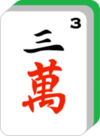
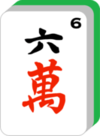

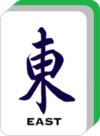
This hand struggles because almost every tile stands alone. There are no adjacent numbers, no overlapping sequences, and no clear path forward. Each tile requires a very specific draw to become useful.
Strong Shape Example




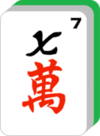
This hand works because several tiles connect naturally. Bamboo already forms a sequence. Circles can grow upward or downward. Characters are one tile away from a sequence. The dragon pair creates a potential pair or triplet. Even if one route fails, others remain available.
Improve Mahjong Hand Shape with 5 Proven Methods
Favor Connected Tiles
Tiles that sit next to each other are always more valuable than isolated tiles. A 4 and 5 can become a sequence in multiple ways. A single 9 has only one direction to grow and often none at all.
When choosing between keeping a connected tile or an isolated tile, the connected tile almost always produces better long-term results.
Avoid Single-Use Honor Tiles
Honor tiles are powerful only when paired or tripled early. A lone dragon or wind tile does nothing for hand shape. It cannot form a sequence and requires two additional identical tiles to matter.
Early in the hand, isolated honors should be treated as expendable unless you already have support for them.
Build Blocks, Not Singles
Strong hands are built from blocks of two or three tiles. These blocks can evolve into melds even if one specific tile does not appear.
For example, holding
Discard the Least Flexible Tile
When choosing what to discard, ask which tile gives you the fewest future options. Flexibility matters more than theoretical value.
Given this hand:


The red dragon is the weakest tile. It cannot form a sequence, has no partner, and provides no flexibility. The suit tiles all have potential to grow in multiple directions.
Keep Pivot Options Open
Good hand shape allows you to change direction without panic. If one suit becomes heavily discarded or blocked, a flexible hand can pivot into another route.
Hands that lock themselves too early often fail because they cannot adjust to the table. Flexibility is what separates intermediate players from beginners.
Quick Shape Drill
Which discard hurts your shape least?
The red dragon is isolated and cannot form a sequence. The suit tiles still offer multiple improvement paths, while the honor tile requires two more copies to matter.