
Module 9: Pattern Recognition
Mahjong strategy is not just about knowing patterns – it is about recognizing them early and adapting in real time. This module teaches you how to see structure inside your tiles, identify winning directions quickly, and avoid committing to the wrong hand.
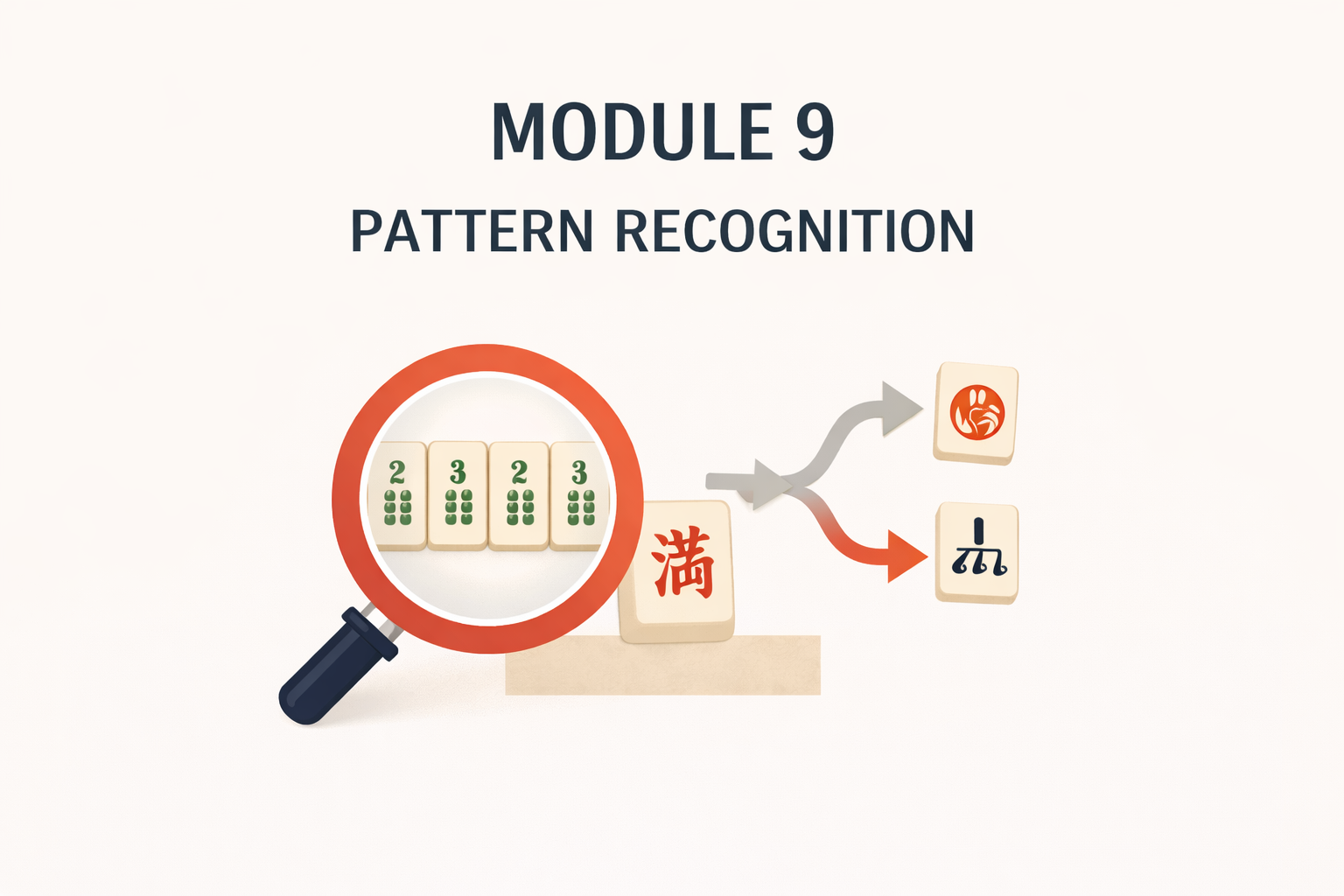
Module Overview
Pattern recognition is the bridge between knowledge and execution, where you move beyond seeing individual tiles and begin to recognize structure as your hand develops. Instead of reacting to each draw, you learn to identify strong directions early, spot multiple pathways within the same tiles, and delay commitment until the most valuable path becomes clear. This shift allows you to anticipate outcomes, maintain flexibility, and consistently build stronger, higher-value hands with confidence.

Download Online Guides from Our Downloads Center
All your printables, guides, and practice tools in one calm space. Browse by topic, download what you need, and come back anytime as the library grows.
Why This Module Matters
Most players struggle not because they lack knowledge, but because they cannot recognize what their hand is becoming in real time. Without pattern recognition, decisions are delayed, opportunities are missed, and hands are often forced into weak or inefficient directions.
This module develops your ability to see structure early and think ahead with clarity. By recognizing patterns as they form, you make faster, more confident decisions, avoid unnecessary risks, and consistently build hands that are both efficient and high in value.
Lessons in This Module
- 5 Minute Pattern Recognition Training
- Lesson 36: Timed Pattern Speed Drills – 1 Incredible Method for Fast Decisions
- Lesson 35: Detecting Hidden Waiting Shapes – 1 Secret Way to Master the Board
- Lesson 34: Identifying Dead Tiles – The Skill That Saves Losing Hands
- Lesson 33: Pattern Snap-Recognition – 1 Powerful Skill for Rapid Play
What You’ll Gain
- The ability to recognize strong patterns within the first few turns
- Clear direction on when to commit versus stay flexible
- Faster decision-making with less hesitation
- Improved hand efficiency through better structure awareness
- Confidence in choosing higher-value paths instead of forcing wins