Mahjong Glossary: 30 Mahjong Terms You Should Know
Mahjong glossary terms are essential for beginners who want to understand the language of the game quickly and confidently. This mahjong glossary explains 30 essential Mahjong terms you will hear at the table, from tile names and hand structures to scoring and winning terminology.New players struggle because Mahjong has its own vocabulary. Learn these 30 terms and the game instantly becomes easier to follow. You don’t need to memorize everything at once—use this as a reference as you play.
If you are new to Mahjong, learning a clear mahjong glossary will help you follow games faster, avoid confusion, and communicate more easily with other players.
Core Tiles and Suits
1. Honor Tiles
All Winds and Dragons. They do not form sequences and are often worth extra points.
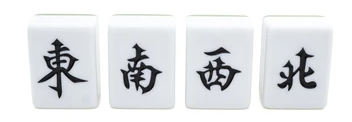
2. Wind Tiles
East, South, West, and North. Can form triplets and sometimes score bonuses.
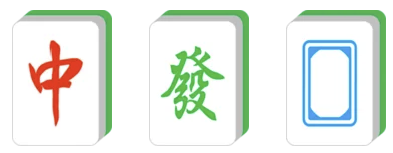
3. Dragon Tiles
Red, Green, and White Dragons. Powerful tiles often used in higher-value hands.
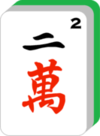
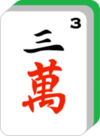
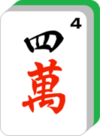
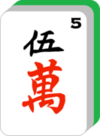
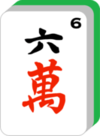
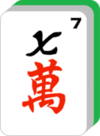
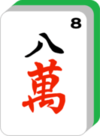
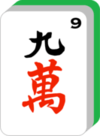
4. Characters
One of the three suited tile sets. Number tiles with the character for “ten-thousand.”
5. Bamboos
Numbered tiles shown as sticks. Another of the three suits.
6. Dots
Numbered tiles shown as circles. The third suit.
| Numbers | ||||||||||
|---|---|---|---|---|---|---|---|---|---|---|
| 1 | 2 | 3 | 4 | 5 | 6 | 7 | 8 | 9 | ||
| Suits | Circles |  |
 |
 |
 |
 |
 |
 |
 |
 |
| Bamboo |  |
 |
 |
 |
 |
 |
 |
 |
 |
|
| Characters | 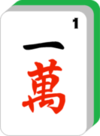 |
 |
 |
 |
 |
 |
 |
 |
 |
|
Hand Structure and Sets
7. Meld
A completed set: sequence, triplet, or quad. Standard winning hands contain four melds and one pair.
8. Pair
Two identical tiles. Every standard winning hand needs one pair.
9. Chow
A sequence of three consecutive tiles in the same suit (e.g., 4–5–6 Bamboo).
10. Pong
Three identical tiles. Can be claimed using another player’s discard.
11. Kong
Four identical tiles. Declaring a Kong grants a replacement tile.
12. Concealed Kong
A Kong formed from tiles you drew yourself; kept hidden until declared.
13. Exposed Kong
A Kong formed using a discard or added to an exposed Pong.
14. Added Kong
Upgrading a Pong into a Kong by adding the fourth tile.
15. Concealed Hand
A hand with no exposed melds.
Winning, Drawing, and Game Flow
16. Win (Mahjong)
Completing a legal winning hand and declaring victory.
17. Self-Draw Win
Winning with a tile you drew yourself.
18. Discard Win
Winning with a tile discarded by another player.
19. Draw Game
No one wins; the wall runs out.
20. Ready Hand
A hand that is one tile away from winning.
21. Discard Pile
The tiles placed face-up in front of each player.
22. Replacement Tile
A tile drawn from the back of the wall after a Kong or Flower reveal.
Strategy and Common Concepts
23. Sequence
Three consecutive tiles in the same suit (another name for Chow).
24. Triplet
Three identical tiles (another name for Pong).
25. Quad
Four identical tiles (another name for Kong).
26. Terminal Tiles
1s and 9s. Important in many special hands.
27. Isolated Tile
A tile that doesn’t connect to anything else; usually a discard candidate.
28. Dead Tile
A tile that cannot complete your hand because all copies are already visible.
29. Defensive Tile
A tile considered safer to discard based on board state.
30. Table Flow
The momentum and rhythm of the game—who is building fast, who is stuck, and how dangerous the board is becoming.
Next Step: Turn Words Into Wins
Now that you understand the basic terms, the next step is building stable hands and learning to read the table. Start with the beginner learning path to practice these concepts in real games.