
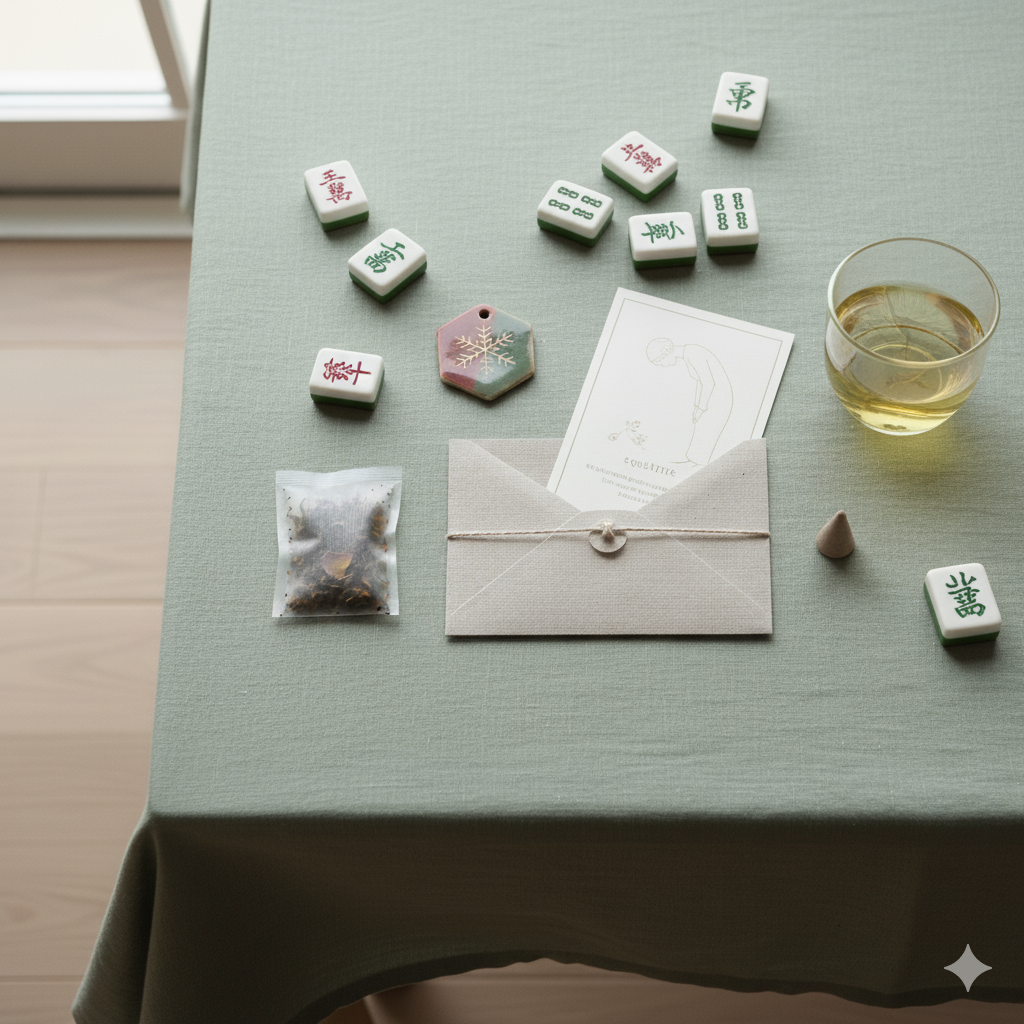
What Is Mahjong? A Complete Beginner’s Orientation
Introduction
Mahjong is a four-player tile game of rhythm, strategy, and calm focus. Players build a complete hand by drawing and discarding tiles, shaping small combinations while paying attention to the flow of the table.
Whether you’ve seen Mahjong played at family gatherings or on digital platforms, this guide gives you a clear, modern overview: what the tiles are, how many of each exist, how a round works, and what it means to win.
1. The Essence of Mahjong
Most Mahjong versions share one universal idea: you’re building a 14-tile winning hand made from small building blocks.
A typical finished hand consists of:
- 4 melds (groups of three or four tiles)
- 1 pair (two identical tiles)
Melds may be:
- Three identical tiles
- Four identical tiles
- A sequence of three tiles in the same suit (in rule sets that allow sequences)
Mahjong is ultimately a balance of craft and intuition — shaping your own hand while staying aware of what others are building.
2. The Tiles (with exact counts)
A standard Mahjong set contains 144 tiles, divided into suits, honors, and optional bonus tiles. The exact tile types may vary slightly by ruleset, but the structure below is one of the most widely used.
Suit Tiles — 108 tiles total
There are three suits, each containing tiles numbered 1 through 9, with four copies of each tile.
- Suit A: 1–9 (4 copies each) → 36 tiles
- Suit B: 1–9 (4 copies each) → 36 tiles
- Suit C: 1–9 (4 copies each) → 36 tiles
Suits form the backbone of most melds and sequences.
Honor Tiles — 28 tiles total
Honors represent special categories that do not follow numerical sequences.
- Wind tiles — 16 tiles
- Four winds, four copies of each
- Dragon tiles — 12 tiles
- Three dragon types, four copies of each
Honor tiles typically form sets rather than sequences.
Bonus Tiles — 8 tiles (optional)
Some Mahjong styles include bonus tiles:
- 4 Flowers
- 4 Seasons
These are single-copy tiles that offer small scoring bonuses and are often set aside immediately when drawn.
Why tile recognition matters
Learning to quickly identify suits, honors, and terminals (1s and 9s) speeds up your decision-making dramatically. The faster you can “read” the tiles, the easier the game feels.
3. The Goal of the Game
Most Mahjong versions consider a hand complete at 14 tiles.
A standard winning hand consists of:
- Four melds
- One pair
Types of Melds (universal terms)
Next Steps
Now that you understand the basics, explore the next article in our Mahjong 101 series: